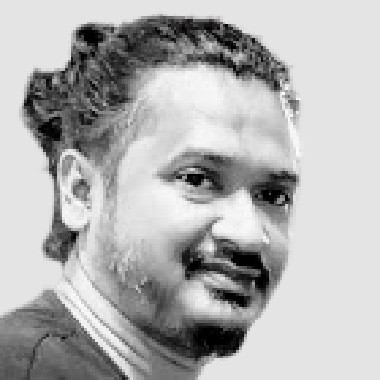
Mahmudur R Manna Engineer · Author

Engineer · Author · Founder, DDSE Foundation

Mahmudur R Manna

I work on enterprise software, decision-driven engineering, and the knowledge layer that AI agents actually need to operate. I write books and papers, run a small open-source foundation, and ship code under that same line of work.

Bangladeshi engineer and author. Two decades across data platforms, cloud-native systems, and SaaS. Founder of the DDSE Foundation; author of Enterprise AI: Strategic Blueprint for Purple People and The World of Active Things. Current research direction is agent-native knowledge modelling.

Mahmudur R Manna

Photo: Rokon Emon

01 / Now

Now

What I have published most recently — preprints, articles, and notes, newest first. Each item links directly to the primary source.

  1. · Preprint

    Active Knowledge Modelling Methodology for Agent-Native Knowledgebases

    A methodology paper proposing AKMM — modelling knowledge as a world of bounded, stateful active things so agents can operate on the case directly instead of reconstructing it from fragments. Bounded methodology evidence from one anchor domain plus two transfer PoCs. Not industrially validated.

    Article HF DOI Zenodo Mirror ResearchGate

  2. · Note

    AI Reviews of The World of Active Things Purple Thinkers

    Two AI reviewers — Gemini Pro and ChatGPT Pro — were given the book with a structured prompt and asked for an independent critical assessment. Both prompts and full model responses are published verbatim, including the parts that were critical or uncertain. The point is transparency about how AI reads a technical argument, not endorsement of a positive verdict.

  3. · Article

    AI & State Machine Towards AI

    Toy agents demo well because they execute single tasks on forgiving inputs with no need to recover. Production agents face three harder requirements: recover from partial failures, hand off to other agents or humans with continuity, and remain observable under monitoring. The article argues all three converge on the same structural gap: an agent with no explicit model of its own state and lifecycle cannot do any of them reliably. State machines are not an architectural preference — they are the precondition.

  4. · Article

    The Missing Middle of Enterprise AI AI Advances

    Enterprise AI deployments tend to stall between the strategy deck and the working system — not because the model is wrong and not because the infrastructure is missing, but because the middle layer is never built. That middle layer must do three things neither the strategy nor the model can do alone: preserve decisions explicitly so they survive team and context change; enforce contracts so agent behaviour stays within intended bounds; and assemble context deliberately so the model operates on the right slice of the world rather than an unfiltered retrieval dump.

  5. · Article

    If You Know MCP but Not Tools, This Is For You Medium

    MCP is a protocol — a standard way for a system to address an LLM through a defined structure — not synonymous with "MCP server". A tool has two distinct halves: the schema (what the model sees: name, description, parameters, required fields) and the command (what the runtime executes). The model sees no code — only the contract. The article opens with a concrete bug: one missing required field in a tool schema caused a cascading night of parser failures, and the fix was not a better prompt but a correctly specified contract.

  6. · Essay

    Pushing Meaning Uphill HF

    Written as the industry's language began converging on the same ground the frameworks already occupied. Three retrospective sections: DDSE — that AI-assisted software delivery requires structured decision records throughout the SDLC, not only code suggestion; ACM — that agent governance must be designed in as typed contracts and replayable ledgers before deployment, not added after problems appear; and CEF — that context is part of the engineering foundation, not a retrieval utility around it. The essay ends on an honest uncertainty: familiar lifecycle examples (O2C, P2P) may have made the deeper argument about decision spaces too easy to overlook.

  7. · Book

    The World of Active Things Amazon

    The monograph behind AKMM. The argument is that knowledge about a thing becomes meaningful only when you first ask: what belongs to this thing as this thing? That is boundary. Then: how does it begin, move, relate, and end within that boundary? That is lifecycle. Current enterprise systems hold the data but hide the active thing behind fragments, status codes, and scattered process residue. The book develops the seven structural features — Start, End, States, Transitions, Events, Relations, Purpose — and the Identity Index as the minimum through which a thing becomes operable knowledge rather than a record cluster.

Subscribe via this site's RSS feed, or follow upstream sources directly: Medium RSS and the Hugging Face blog.

02 / Methods

Frameworks & methods

A coherent stack for enterprise-grade agentic systems: DDSE for decisions, ACM for contracts and runtime, CEF for context, and AKMM for knowledge modelling. Each card states the scope boundary and links to the published source.

AKMM — Active Knowledge Modelling Methodology

Methodology · 2026 · DOI & book

Models a knowledgebase as a world of Active Things with explicit boundary, lifecycle, identity, lived memory, canonical events, and purpose, so AI agents can operate on the case rather than reconstruct it.

Boundary. Bounded methodology evidence (one anchor, two transfer PoCs). Not an industry standard.

DOI Article Book

DDSE — Decision-Driven Software Engineering

Methodology · 2025 · Site, DOI & repo

An SDLC where significant technical decisions are captured and governed as first-class artefacts (MDD, ADR, EDR, IDR, TDM), so AI-assisted development stays inside human authority and preserves architectural intent.

Site DOI GitHub DDSE vs SDD

ACM — Agentic Contract Model

Specification & runtime · 2025 · DOI & repo

A spec-first contract layer for agentic systems: typed contracts, deterministic execution, and a replayable decision memory so agents can be reasoned about, not just observed.

DOI GitHub Docs Article

CEF — Context Engineering Framework

Framework · 2025 · Repo (research-grade)

An ORM-style framework for LLM context: relationship-aware context assembly over knowledge models with graph and vector persistence. Intended as a research foundation, not a hardened product.

GitHub Docs Article

EAITF — Enterprise AI Transformation Framework

Book framework · 2024 · DOI

The framework behind Enterprise AI: Strategic Blueprint for Purple People: decision-domain inventory, profiling, and an AI Effectiveness Index derived through PCA over scored decision domains.

DOI Leanpub Amazon

Cockpit / Reactive Cloud

Architecture & framework · 2018–2019 · Repo & articles

Java PWA and microservice platform with Netty/Jersey, an API gateway, and event-driven SPA shell — the architectural backbone of the CloudOffice digital workplace work.

GitHub Cockpit article Reactive Cloud article

03 / Books & papers

Books & papers

Five books and ten preprints I have written, covering knowledge engineering, AI methodology, software architecture, enterprise strategy, philosophy, and governance. Preprints expand with full abstracts; the complete record is on ORCID.

Books

  • The World of Active Things book cover
    The World of Active Things Apr 2026 · 81 pp · Monograph behind AKMM. Argues knowledge is better modelled through bounded, stateful active realities than through static records and documents.
    #99 in Data Modeling & Design.
    Kindle · DOI
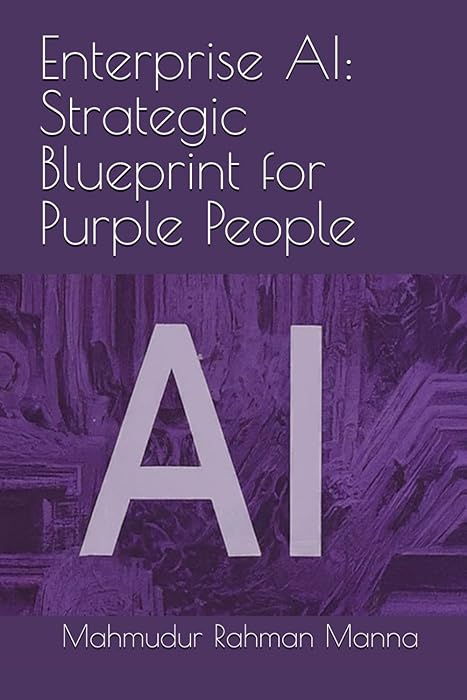
  • Enterprise AI: Strategic Blueprint for Purple People book cover
    Enterprise AI: Strategic Blueprint for Purple People May 2024 · 181 pp · Introduces the Enterprise AI Transformation Framework (EAITF): decision-domain profiling, Principal Component Analysis, and an AI Effectiveness Index with a Python walkthrough.
    ★★★★☆ 3.8 · 5 reviews
    Leanpub · DOI
  • ESG Data Explained book cover
    ESG Data Explained 2023 · A hands-on reference for professionals, policymakers, and investors: environmental, social, and governance metrics with Python calculation examples and global case studies including India and Bangladesh.
    Companion: Part I · II · III
  • ELIAS: The Quest for Meaning book cover
    ELIAS: The Quest for Meaning Aug 2024 · 100 pp · A novella-style dialogue where a researcher studies toxic workplace behaviours alongside Elias Thorn — covering distrust, scarcity mindset, and the search for purpose. Reviewed by Gabriel Santos for Readers' Favorite.
    #2,372 in Behavioural Psychology.
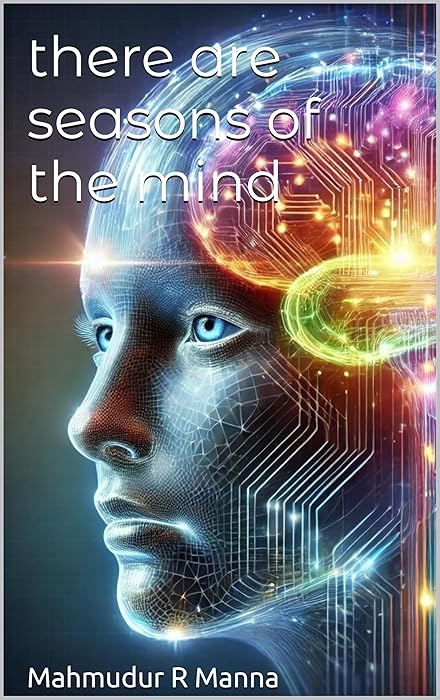
  • There Are Seasons of the Mind book cover
    There Are Seasons of the Mind Feb 2025 · 43 pp · Kindle. Introduces the PEPPA framework (Peace as Purpose, Emotional Intelligence, Proactivity, Patience, Acceptance) — integrating entropy, inertia, and equilibrium from physics with Stoic and Frankl-inspired principles for human resolve.

Papers & specifications

  • Methodology & specification
  • Active Knowledge Modelling Methodology for Agent-Native Knowledgebases Apr 2026 · preprint

    Proposes that knowledge engineering for agents requires boundary analysis — defining where a thing starts, ends, relates, and what its purpose is — as the first modelling step, before lifecycle or state work begins. A knowledgebase composed of Active Things gives an agent an entry point into a case rather than forcing reconstruction from disconnected records and documents. Seven structural features (Start, End, States, Transitions, Events, Relations, Purpose) constitute the Identity Index of any Active Thing. Evidence is bounded to one anchor domain plus two transfer PoCs; not industrially validated.
    Article · Book

  • Agentic Contract Model — Core Specification v0.5 Oct 2025 · specification

    Where most agent frameworks treat goals, plans, and tools as prompt constructs, ACM defines them as typed artefacts with explicit lifecycle states, guard conditions, capability maps, and a replayable ledger. The effect is that agent behaviour can be inspected, replayed, and reasoned about — not only observed after the fact. The specification includes a TypeScript reference runtime and is published under the DDSE Foundation.
    GitHub · Article

  • Decision-Driven Software Engineering for AI-Assisted Development Jul 2025 · preprint

    Argues that AI-assisted development fails when the AI lacks the structured context experienced engineers carry implicitly. DDSE's answer is to make significant technical decisions — architectural, engineering, incident, technology — first-class artefacts (ADR, EDR, IDR, TDM, MDD) that persist across team changes and remain the explicit boundary within which AI operates. Humans retain authority; the AI uses decision records as context, not discretion.
    Foundation site · DDSE vs SDD

  • A Dynamic Neuro-Symbolic Approach to Bridging Conceptual Knowledge Gaps Mar 2025 · preprint

    A hybrid architecture for closing gaps in structured knowledge: a symbolic knowledge graph identifies where conceptual connective tissue is missing, GPT is queried incrementally to propose bridge concepts, and the proposed chain is validated and reintegrated into the graph. The cycle iterates until the gap narrows below a threshold. Frames the problem as one of convergence, not generation — the LLM fills specific holes rather than generating freeform explanations.

  • Integrating Machine Learning into Established Application Architectures Jun 2024 · preprint

    A practical mapping of ML integration patterns for enterprise engineers working with existing Java/microservice systems. Covers sidecar inference, async event-driven ML triggers, API bridge patterns, and the deployment lifecycle differences between ML models and conventional software artefacts. Addresses the common failure mode of treating an ML model as a library call rather than as a separately versioned, separately deployed runtime.

  • Philosophy, governance & work
  • Thinking GPT — Inspired by Descartes' Discourse on the Method Oct 2024 · preprint

    Applies Descartes' four rules — decompose, order, enumerate, review — as a reasoning discipline imposed on GPT. The central question is whether a Cartesian audit structure (accept nothing unexamined; divide each difficulty; proceed from simple to complex; enumerate to ensure completeness) produces more reliable, less confabulated responses on complex reasoning tasks than open-ended prompting. A methodological experiment in structured epistemic discipline applied to large language models.

  • PEPPA Framework — Physics, Philosophy, Psychology for Human Resolve Sep 2024 · preprint

    The DOI-backed preprint behind There Are Seasons of the Mind. Models human mental resilience through three physics metaphors: entropy (sustained effort without deliberate renewal degrades capability), inertia (initiating change requires activation energy beyond intention alone), and equilibrium (performance requires balance between challenge and recovery). Integrated with Stoic self-regulation and Viktor Frankl's will-to-meaning as practical counterweights to each physical force.
    Book

  • Reimagining Value: Harnessing the Attention Economy for a Transparent and Engaged Society Aug 2024 · preprint

    Argues that the engagement-maximising design of current social platforms is not technologically inevitable — it is a deliberate architectural choice. Proposes an alternative set of design principles oriented toward transparency, contribution, and civic participation that could redirect the same attention infrastructure toward measurably better social outcomes, without requiring platform replacement.

  • The Productivity Paradox Aug 2024 · preprint

    Distinguishes between activity (visible motion through tools, meetings, and status updates) and productive work (directed effort that moves a stated goal forward). Examines the structural conditions — notification design, meeting culture, tooling overhead, and fragmented context — that make high-activity, low-output environments self-reinforcing, and why individual willpower is an insufficient corrective.

  • Generation Z and the Single Neck to Choke Philosophy Aug 2024 · preprint

    The "single neck to choke" management model concentrates accountability at one person as a mechanism of control. This paper argues the model is structurally incompatible with networked, cross-functional work — and with Gen Z's expectation of distributed ownership — because it optimises for blame assignment over problem resolution, damages trust faster than it creates accountability, and collapses under the ambiguity of modern product delivery.

Full record on ORCID.

04 / Code

Code

Public repositories I maintain or have authored. DDSE Foundation repos are open-source infrastructure I built for the methodology; personal repos span platform architecture experiments, reactive frameworks, and research tooling.

  • DDSE Foundation
  • ddse-foundation/acm
    Specification & runtime · TypeScript

    Agentic Contract Model — a spec-first contract layer for agentic systems. Where most agent frameworks treat goals, plans, and tools as prompt constructs, ACM defines them as typed artefacts with explicit lifecycle states, guard conditions, capability maps, and a replayable decision ledger. Agent behaviour can be inspected and replayed, not just observed after the fact. Ships a TypeScript reference runtime under the DDSE Foundation.

    TypeScript GitHub Docs Article DOI
  • ddse-foundation/cef
    Framework · Java · Research edition

    Context Engineering Framework — an ORM-style layer for LLM context assembly. Moves beyond retrieval by modelling knowledge as typed entities with relationships, lifecycle, and semantic distance. Combines graph and vector persistence, relationship navigation, parser systems, and LLM integration so that context is assembled deliberately rather than retrieved as a flat embedding result. Marked as a research edition; not enterprise-hardened.

  • ddse-foundation/ddse-foundation
    Templates & reference · Python

    DDSE implementation templates, decision record formats, and worked examples for teams adopting Decision-Driven Software Engineering. Covers the full set of DDSE artefact types — Architectural Decision Record (ADR), Engineering Decision Record (EDR), Incident Decision Record (IDR), Technology Decision Map (TDM), and Master Decision Document (MDD) — with guidance on how each fits into an AI-assisted development workflow where humans retain authority.

  • Platform & cloud engineering
  • mrmanna/cockpit
    Platform experiment · Java · 2018–2019

    Java PWA and microservice development platform from the CloudOffice digital workplace work. The architecture centred on a Netty 4 HTTP/2 API gateway routing to Jersey microservices, with a bck2brwsr-compiled browser-side SPA shell, a gadget SDK for composable UI modules, and a SASS/JSON theme and layout builder. A 2018–2019 article series documents the design choices behind the gateway, reactive push communication, stateless process claims, and session/token security.

  • kareegor/mmfb
    Cloud-agnostic ecosystem · Java · 2021

    Multi micro-frontends and backends — a five-session build of a cloud-agnostic microservice ecosystem. Stack: Spring Boot services, Traefik reverse proxy, Keycloak auth, Consul service discovery, Kafka messaging, Angular microfrontends, Prometheus and Grafana observability. The central constraint is portability: the same system runs on a developer machine, in Docker Swarm, and on any Kubernetes provider without environment-specific changes. Original repository under the kareegor organisation (also owned).

  • mrmanna/agnosticmlflow
    ML pipeline experiment · Python · 2025

    Cloud-agnostic ML pipelines extending the same portability constraint from microservices into the ML layer. Uses Apache Beam with an Apache Flink runner on Minikube and MinIO as object storage, so the same pipeline code runs locally and can target any cloud-hosted Beam runner without vendor lock-in. Companion to the nine-part cloud-agnostic platforms article series.

    Python GitHub Article
  • Experiments & utilities
  • mrmanna/Nvidia_Nemo_FastPitch_TTS_Example
    Worked example · Python · 2024

    Step-by-step build of a fully local, offline text-to-speech system using Nvidia NeMo and the FastPitch acoustic model. Documents the full pipeline from model download and environment setup through inference and audio output — useful for engineers who need production-grade TTS synthesis without a cloud dependency or per-request API cost.

    Python GitHub
  • mrmanna/immutable-object-builder
    Design-pattern utility · Java · 2023

    Builder pattern implementation using Java functional interfaces to enforce strict immutability after construction. Rather than relying on defensive copying or convention, the pattern makes mutation structurally impossible through the interface contract itself — a useful reference for teams designing domain objects that must be safe across concurrent and event-sourced contexts.

    Java GitHub

05 / Demos & talks

Working notes, on camera

Short, unproduced recordings — agent runs, architecture walkthroughs, framework demos. Hosted on YouTube under @PurpleThinkers; included here as artifacts of the working method, not as productions.

AI & agent systems

07 / Arc

Arc

Twenty years of the same founding-architect pattern: I enter a greenfield, form the team, ship the platform, and hand over a running system. Five phases, ten engagements, six countries.

  1. 2004–2008
    Early data tooling & teaching
    🇬🇧 UK 🇧🇩 Bangladesh Oracle 9i · Java Swing BI tooling · Academia
    • Creator Tech Programmer  ·  2003–2005  ·  🇧🇩 BD

      Database-driven enterprise applications; grounded early architecture instincts in schema design, SQL-heavy ORM patterns, and application-layer data access.

    • London Metropolitan University Final-year project  ·  2004–2005  ·  🇬🇧 UK

      Designed and built a Data Warehousing Studio — an IDE for schema design, ETL pipeline construction, and semantic-layer modelling on Oracle 9i with Java Swing. National newspaper recognition.

    • Daffodil Institute of IT Lecturer, CS & Advanced Databases  ·  2006–2008  ·  🇧🇩 BD

      Supervised the highest-performing final-year engineering projects in the programme; returned later as mentor and advisor. First evidence of the teaching-while-building pattern that continues throughout the career.

  2. 2008–2014
    BI, portals & global delivery
    🇧🇩 Bangladesh 🇫🇮 Finland 🇳🇱 Netherlands 🇮🇳 India Up to 28 engineers Pentaho BI · Liferay · J2EE · ERP
    • Mananco Microsystem Inc. Founder  ·  2008–2009  ·  🇧🇩 BD (global delivery)
      10+ engineers 50+ global projects

      Bootstrapped a BI and portal services studio with 10+ second- and third-year CIS students. Delivered 50+ client projects worldwide via oDesk and Elance. Stack: Pentaho BI, Liferay, Java, PHP. First iteration of the team-building-from-scratch pattern.

    • Codemate Oy Software Architect & Scrum Master  ·  2010  ·  🇫🇮 Finland / 🇧🇩 BD offshore
      12-engineer offshore Java team Oulu Municipality

      Founding architect of the Oulu Municipality collaboration portal. Prototyped in 3 months, won the engagement; built a 12-engineer Java offshore team in 9 months. Liferay, Alfresco ECM for document management, Openfire XMPP for real-time messaging, CAS + OpenLDAP single sign-on.

    • Zensar Technologies Liferay Team Lead  ·  2011  ·  🇳🇱 Amsterdam / 🇮🇳 Pune
      10-engineer Pune team 53 countries · 17 languages

      Team lead and main architect for the Bugaboo global collaboration portal: 53 countries, 17 languages. Built a 10-engineer Pune team in 8 months. Led architecture, technology roadmap, integration strategy, code reviews, and on-site training across Amsterdam and India.

    • EUSIA Ltd. / Dzoin Founder & Solutions Architect  ·  2012  ·  🇳🇱 NL / 🇧🇩 BD
      7+ engineers recruited

      2nd Phase Lead Architect of Dzoin — a multi-million Euro real-estate management platform for Dutch property associations. Cloud-agnostic DevOps environment; modules: document management, CRM, social calendars, project tracking, site builder, content management.

    • Newgen Technology Ltd. Head of Enterprise Architecture (Babylon Group)  ·  2013–2014  ·  🇧🇩 BD
      28-engineer Java team 19 factories

      Founding technical leader for a ground-up manufacturing ERP spanning Babylon Group's 19 factories. Recruited and led a 28-developer Java team from mixed seniority. Introduced Agile methodologies, CI/CD pipelines, environment virtualisation, and BI/analytics capability.

  3. 2014–2019
    CloudOffice — digital workspace platform
    🇧🇩 Bangladesh 🇳🇱 Netherlands JV 16 engineers SaaS · Java PWA · Microservices · HTTP/2
    • Cloudoffice Co-founder & Founding Architect  ·  Nov 2014–May 2019  ·  🇧🇩 BD / 🇳🇱 NL JV
      16-engineer team Mental health network → generic digital workspace

      Started as founding architect of a national networking platform for Dutch mental health institutes; evolved into a generic cloud-agnostic digital workspace platform. Java JSON-service backend, multiple PWA frontends, Netty 4 HTTP/2 API gateway (Cockpit), Jersey microservice SDK, bck2brwsr browser model, drag-and-drop site builder, document management, workflow approval, real-time GPS tracking, form builder, and reporting dashboards. Integrated with Liferay and Apache OFBiz for enterprise extension. Recruited and grew the 16-engineer team.

  4. 2019–2022
    Conversational AI, microservices & cloud-agnostic platforms
    🇧🇩 Bangladesh 🇩🇪 Germany 🇯🇵 Japan 🇪🇸 Spain (remote) Conversational AI · MLOps · Cloud-native · Kubernetes
    • Hishab Advisor, Software Architecture  ·  Oct 2019–Feb 2020  ·  🇧🇩 BD · 🇩🇪 DE · 🇯🇵 JP
      +4 engineers recruited

      Re-architected a conversational AI platform with engineers working directly across Bangladesh, Germany, and Japan. Introduced a reliability taxonomy, rebuilt the ML pipeline around it, established MLOps for model deployment, applied 12-factor app principles, and set up a new CI/CD workflow that significantly accelerated release cycles across the distributed team.

    • Together Initiatives Ltd. Advisor, Microservice Architecture  ·  May–Sep 2020  ·  🇧🇩 BD
      3+ engineers recruited

      Designed a cloud-native microservices architecture with no single point of failure: Kubernetes with Traefik ingress, Consul service discovery, Keycloak SSO with Active Directory integration, Spring Cloud services. Mentored distributed teams on Agile and Extreme Programming practices.

    • ADN DigiNet Ltd. Chief Software Architect  ·  Sep 2020–Jul 2021  ·  🇧🇩 BD
      35+ team · 6+ recruited Inherited existing team

      Chief architect at ADN Telecom's digital unit. Architected Roboket Marketing Platform — a campaign and customer journey execution backbone for telecom-grade digital marketing operations. Restructured the software development process, introduced Agile, and modernised the technology stack.

    • Arya Consulting Advisor, Software Architecture  ·  Aug 2021–Jan 2022  ·  🇪🇸 Sevilla (remote)

      Machine learning, API design, and data architecture advisory for a startup product team. Shaped the solution blueprint for scalability and ML-driven feature integration; mentored engineers on architecture principles and model deployment practices.

  5. 2022 – present
    Enterprise AI & the DDSE direction
    🇮🇳 India 🇧🇩 Bangladesh 1 → 70+ engineers 4+ SaaS platforms Big-4 · Enterprise AI · Agent systems
    • Ernst & Young (EY) Associate Director, Client Technology  ·  Jan 2022–present  ·  🇮🇳 IN / 🇧🇩 BD
      Grew team: 1 → 70+ 4+ SaaS platforms in production Currently: Principal Architect, CTO Office

      First hire and founding architect of EY's Client Technology product unit — a product organisation built inside a Big-4 firm. Designed the foundational platform stack on which 4+ SaaS platforms are now built and running across service lines. Cloud-native, multi-cloud architecture with Agile engineering standards. Grew the organisation from one person to 70+ engineers. Currently serving as Principal Architect for the CTO Office.

    • DDSE Foundation Founder  ·  2023–present  ·  🌐 Open source

      Founded the DDSE Foundation to formalise Decision-Driven Software Engineering as an open methodology. Produced ACM (Agentic Contract Model), CEF (Context Engineering Framework), decision record template standards, and the underlying papers on enterprise AI governance, agent system design, and active knowledge modelling.

08 / Terms

Terms

Terms I use across my work, grouped by the framework or methodology they come from. Each definition links to the primary source where the term was introduced.

Active Things & AKMM
Active Thing
A bounded, stateful reality that begins, changes, relates, and ends. The fundamental unit AKMM models knowledge around: not a record or document, but a thing with a lifecycle, states, transitions, events, relations, and a purpose. Book · Preprint.
Active Thing Type
The schema-level definition of a bounded reality: what states, transitions, events, relations, and purpose apply to all instances of that class. Distinct from an instance, which is a specific named thing in a specific lifecycle. Preprint.
Identity Index
The active skeleton of a thing — start, end, current state, transitions, canonical events, live relations, and purpose — exposed as a first-contact knowledge structure before any action begins.
Lifecycle Memory
A record of how a thing has lived, not only what changed: the path through states, not a generic audit log. Preprint.
Canonical Event
A shared occurrence (e.g. “contract signed”) that multiple active things can register, each with its own per-thing consequence — separates the event from the reaction. Preprint.
Relation Surface
A derived projection of an active thing’s live relationships at a given lifecycle moment — what it is connected to and in what state those connections currently are.
Boundary Analysis
The first principle of AKMM: before modelling, establish what the thing is, what it is not, where it starts, and where it ends. The boundary precedes structure. Book.
Agent-native knowledgebase
A knowledgebase designed so an agent enters a composed world of typed, stateful, related things — not a flat pile of text fragments assembled at query time. AKMM is the modelling methodology for building one. Article.
DDSE, ACM & CEF
Decision-Driven Software Engineering (DDSE)
A methodology for AI-assisted software development where decisions — architectural, engineering, incident, technology — are first-class typed artefacts throughout the SDLC. Humans retain authority; AI uses decision records as structured context rather than inferred intent. Preprint · Foundation.
Decision Record
A typed, structured document capturing the context, options, chosen direction, and rationale of a decision. DDSE defines five kinds: ADR (Architectural), EDR (Engineering), IDR (Incident), TDM (Technology Decision Map), and MDD (Master Decision Document). Repo.
Agentic Contract
A typed specification an agent must fulfil: goals, plans, tools, policies, tasks, capabilities, and a replayable decision ledger. Where a prompt is advisory, a contract is verifiable. Repo · DOI.
Contract (in ACM)
The runtime artefact that enforces an agentic contract: guard conditions, capability map, execution policy, and a ledger that can be replayed — so agent behaviour can be reasoned about, not only observed after the fact. Repo.
Context Engineering
The discipline of assembling LLM context deliberately — through typed knowledge models, relationship navigation, and lifecycle awareness — rather than retrieving it as a flat embedding result. CEF is the research implementation of this approach. Repo · Article.
Enterprise AI & EAITF
Enterprise AI Transformation Framework (EAITF)
A structured approach for prioritising, sequencing, and governing AI deployments in large organisations — covering decision domain identification, readiness scoring, and human authority across the AI programme. Introduced in Enterprise AI: Strategic Blueprint for Purple People. Book DOI.
Decision Domain
A bounded class of decisions inside a business process; the unit of profiling and readiness scoring in the EAITF. Identifying decision domains before selecting AI tools is the core discipline the framework teaches. Article.
AI Effectiveness Index (AEI)
A scoring construct from the EAITF that measures how effectively AI is operating within a decision domain, across dimensions of reliability, human authority, and business fit. Book DOI.
Purple People
Engineers and leaders who work at the boundary between AI capability and business reality — neither pure AI researchers nor pure executives. The audience the Enterprise AI book is written for and the profile the EAITF is designed to develop. Book.
Platform & architecture
Cloud-agnostic
A constraint on a system: it must run standalone on a developer machine, in Docker Swarm, and on any Kubernetes provider — without environment-specific changes. A portability requirement, not an identity label for the engineer. MMFB repo.

09 / Connect

Connect

Where to find me: ORCID for DOI-indexed research, GitHub for code, Medium for long-form writing, Hugging Face for ML-adjacent articles and preprints, LinkedIn for professional context.